

TCP Working: 3-Way Handshake and Reliable Communication
Understanding the TCP 3-Way Handshake Process

Introduction
Imagine a world where computers send data to each other without any rules. Messages might arrive half-complete, arrive multiple times, arrive out of order, or never arrive at all. In such a system, opening a website, downloading a file, or sending an email would be unreliable and frustrating. The modern internet avoids this chaos because it relies on strict communication rules. One of the most important of these rules is TCP, the Transmission Control Protocol.
TCP is the reason we can trust the internet for serious work. It ensures that data is delivered reliably, in the correct order, and without corruption. To understand how TCP achieves this, we need to look at why it exists, the problems it solves, and how it carefully manages a connection from start to finish.
What Happens If Data Is Sent Without Rules
When data travels across a network, it does not move as a single piece. It is broken into small packets and sent independently. These packets may take different routes across the internet. Some may arrive quickly, some slowly, and some may get lost entirely. Without a system to manage this, the receiving computer would have no way to know whether it received everything or whether the data makes sense.
This is the problem TCP is designed to solve. It sits between applications and the network and takes responsibility for making unreliable networks appear reliable to software.
What Is TCP and Why It Is Needed
TCP is a transport-layer protocol that provides reliable, ordered, and error-checked delivery of data between two systems. Applications such as web browsers, email clients, and file transfer tools depend on TCP because they require correctness. A web page that loads with missing content or a file that downloads with corrupted bytes is not acceptable.
TCP creates the illusion of a stable, direct connection between two machines, even though the underlying network is unpredictable.
Problems TCP Is Designed to Solve
TCP addresses several fundamental networking problems at once. It ensures that data arrives in the correct order even if packets are received out of sequence. It detects missing packets and retransmits them. It prevents duplicate data from being delivered to applications. It also controls the speed of transmission so that a fast sender does not overwhelm a slow receiver.
All of these responsibilities are handled automatically by TCP, allowing application developers to focus on application logic instead of network reliability.
What Is the TCP 3-Way Handshake
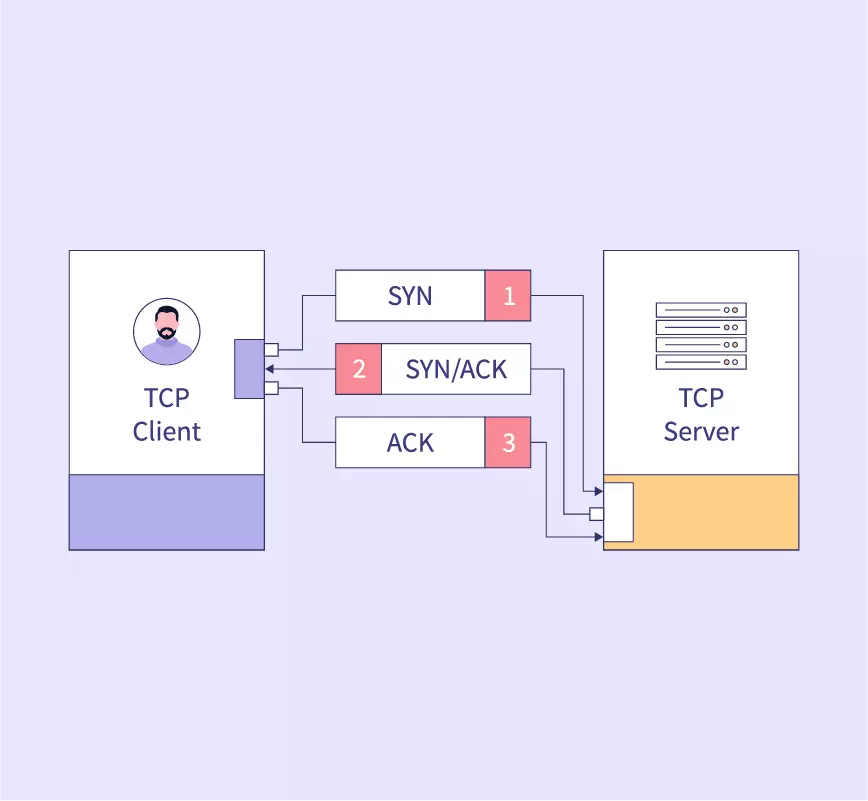
Before any real data can be exchanged, TCP must establish a connection. This process is called the 3-way handshake. Its purpose is to make sure both the client and the server are ready to communicate and agree on how the communication will begin.
A simple way to think about the handshake is as a short conversation. One side says it wants to talk, the other side acknowledges and agrees, and the first side confirms that agreement. Only after this exchange does meaningful communication begin.
Step-by-Step Working of SYN, SYN-ACK, and ACK
The handshake begins when a client wants to connect to a server. The client sends a message called SYN, short for synchronize. This message says, in effect, “I want to start a connection, and here is my starting point.”
The server receives this SYN and replies with a SYN-ACK. This response means, “I received your request, I am ready to communicate, and here is my starting point.” It acknowledges the client’s request while also sending its own.
Finally, the client sends an ACK back to the server. This message confirms that the server’s response was received and understood. At this point, both sides know that the other is ready, reachable, and synchronized. The TCP connection is now established.
Only after this three-step exchange does TCP allow application data to flow.
How Data Transfer Works in TCP
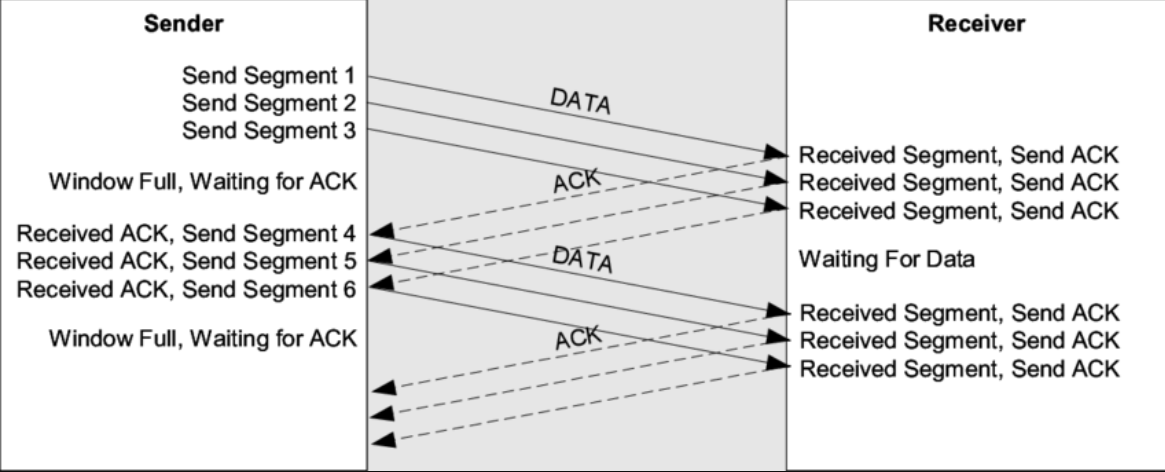
Once the connection is established, TCP begins transferring data in segments. Each segment is assigned a sequence number. These sequence numbers allow the receiver to reconstruct the original data in the correct order, even if segments arrive out of sequence.
After receiving data, the receiver sends back acknowledgements. An acknowledgement tells the sender how much data has been successfully received so far. This feedback loop continues throughout the communication.
How TCP Ensures Reliability, Order, and Correctness
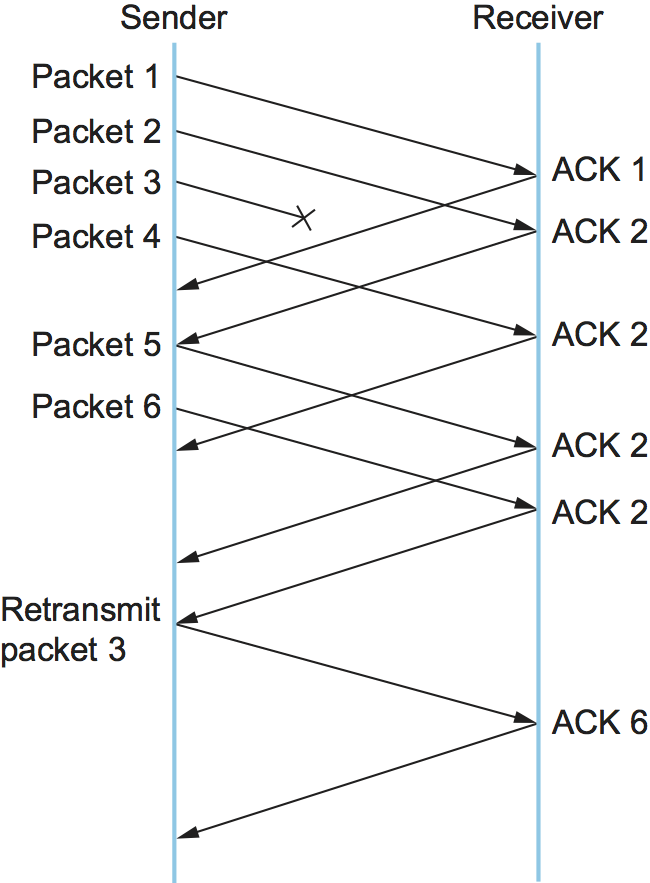
TCP’s reliability comes from its constant verification. If a segment is lost, the receiver will notice a gap in the sequence numbers. When the sender does not receive an acknowledgement for certain data within a reasonable time, it assumes that data was lost and retransmits it.
TCP also ensures order by buffering out-of-order segments and delivering them to the application only when the missing pieces arrive. Duplicate segments are detected and discarded. Error detection mechanisms ensure that corrupted data is not passed upward.
From the application’s perspective, TCP delivers a clean, ordered stream of bytes, even though the network underneath may be chaotic.
How a TCP Connection Is Closed
Just as TCP carefully establishes a connection, it also closes it in a controlled way. When one side has finished sending data, it sends a FIN message, indicating that it has no more data to send. The other side acknowledges this with an ACK.
If the second side also has no more data to send, it sends its own FIN, which is again acknowledged. This orderly shutdown ensures that all remaining data is delivered before the connection is fully closed.
This process prevents data loss at the end of communication and ensures both sides agree that the session is finished.

Conclusion
The article explores the importance of TCP (Transmission Control Protocol) in ensuring reliable, ordered, and error-free data transmission over the internet. It highlights the challenges of transmitting data without a set of rules and describes how TCP solves these by establishing stable connections through a 3-way handshake process. TCP manages data transfer using sequence numbers and acknowledgements, ensures data integrity, and provides orderly connection closure, preventing data loss and ensuring reliability for internet-enabled applications.


